Showing posts with label diversity. Show all posts

28 December 2017

Interview Gabriel Grill

I have known Gabriel since a long time. We met at an early meetings of the Java User Group Vienna many years ago. I noticed him sharing content concerning diversity. It was just a matter of time until I would make him share his views ;-)

Gabriel, please introduce yourself. Why did you choose to become a software developer?
My name is Gabriel Grill. Currently I am writing my Master's Thesis at the University of Technology, Vienna, and work at the Austrian Centre for Digital Humanities at the Austrian Academy of Sciences. I started programming in high school (HTL). My main reasons for choosing the field at that time were the possibilities for earning money afterwards and the high probability of having a secured job in the future. After I got to know programming more, I liked how seamless one could use this skill to create things, the puzzle solving aspects of it and the creativity one needs to find solutions. I always tried not to focus too much on computing only. Consequently - at university - I took lectures in the social sciences, was politically involved, played the drums, did theatre and so on.
brosI know that you are concerned with sexism. For example I noticed you sharing content about women in technology. Why does that matter to you?
I believe it is important to be socially engaged in groups, organisations, etc. one is a part of and try to improve conditions for marginalised people there. Inclusion helps everybody. I very much recommend to watch this video on gender-inclusive software design by Distinguished Professor Margaret Burnett, which explains this point much better then I could.

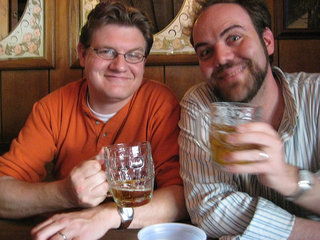
My engagement in tech is not limited to barriers women have to face, I think structural discrimination against this group is still a very big issue in the community. Structural means that the discrimination is ingrained into the culture, normalised, and thereby one has to actively learn, reflect and work against exclusionary mechanisms to change the status quo. In male majority communities, such as the developer community, often so called "bro" cultures emerge. They have certain unwritten rules of how one should act and look like, to be a part of them. An example to me is the beer with "the guys" after work. Bonds are often formed there which in turn may help the people participating to advance in their careers. But there are people who are not into that or do not have the time. Similarly smoke breaks allow those who participate to connect more. Another example, which I have noticed several times in conversations or talks at conferences, are various forms of sexualisation or objectification through jokes or comments, which have exclusionary effects. These seemingly small things together make up a culture in which some have it easier to be a part of. Many of these mechanisms are not unique to developer communities but prevalent in society. The "Pop Culture Detective" is a great YouTube-Channel with many videos on reflections of portrayals of culture in media. I recommend its videos on the "Big Bang Theory" and nerdom especially to male developers (Part 1 - The Adorkable Misogyny of The Big Bang Theory, Part 2 - The Complicity of Geek Masculinity on the Big Bang Theory). I think we all would benefit a lot from a more inclusive and reflective community where for instance I, as a man, would not have to act and dress in certain ways to feel "normal". I would love if our community was much more about supporting one another and thinking about how to improve society.

What other topics are you concerned about?
I usually do political work in the contexts I am directly involved in. Consequently I have been doing a lot of student politics working against different types discrimination based on income, gender, race, accessibility at university. I believe in Austria we have a special responsibility to reflect and remember our past and work against right wing tendencies that want to divide society. In this manner, I want to point to Karl Popper's "Paradox of tolerance" which states: "Unlimited tolerance must lead to the disappearance of tolerance. We should therefore claim, in the name of tolerance, the right not to tolerate the intolerant." I try to take part in protests or actions that I am fond of and generally work on awareness through campaigns.

I am also interested in net politics, privacy and ethics of programming or more generally algorithmic systems. I have created a seminar lecture at TU Wien together with professor Tompits and my colleague Matthias Fassl to enable students to read scientific papers on ethical and social aspects of such systems and have interesting discussions. I try to talk at events or conferences sometimes to raise points I find important. I think generally as developers we need to spend more time on reflecting and learning how to build systems for people. This entails taking diversity into account and creating software which is not only tailored for a small subset of people who are well-off anyway but also useful to people with little money or single parents. I educate myself through lectures mostly in the social sciences, blogs and papers. I recommend to look through YouTube and Twitter, and consume content of people who belong to marginalised groups, such as Feminist Frequency, Kat Blaque and Annie Elainey. There is a lot to learn about other experiences.

I think global warming is a big issue and my actions here are more on a personal level like eating only little meat.

Outside your personal topics discussed till now, what do you consider the biggest challenges (for humanity)?
That is a very tough question to answer. I think it would be arrogant of me to answer this question bluntly. Depending on your circumstances the answers would be very different. For instance to me climate change is a big issue, but there are many people out there who see this differently. I think it is very important to explain to them that doing nothing makes things worse, but there may be no universal human challenges on which everybody completely agrees on. As a middle European, white, male, able-bodied, computer science student to me climate change may be a big issue at the moment, but for people who are starving or live in poverty other priorities apply.

Many developers would probably answer this question somehow similar because it is still a very homogeneous group. That is why I believe questions like this should be asked to people with different backgrounds to get a better answer. This would necessarily include most people that are part of the global South. I think as developers we should look more outside our own bubbles to grow our perspectives. I consider dealing with remnants of colonialism as a very important issue and in turn exploitation of the global South as well as weapon trading and war. Most of the other issues I have mentioned in the previous question.
Speak up, make your voice heardWhat do you do to engage in the topics? For example, did you take part in public protests, donate money to NGOs or sign petitions?
I do things like trying to eat less meat and use public transport as much as possible, but ultimately I think most important are policies. The issues mentioned in the previous questions should be tackled collectively through democratic processes by engaging in a political party or other organisation, raising awareness through events or activism and learning on what issues are there and what they really are about. I do many of these things and the ones you mentioned in the question as well, but still time and money is limited and you have to prioritise.

I would like to see more impact of my regular work on these important topics. Do you think that is possible in general?
I do not know if it is possible in general, but I think as developers we are in the position to be able to choose were we want to work. We can ask critical questions, have a positive influence on the projects we work on, raise awareness on issues in the organisation we are a part of and so on. If many developers, consumers and other stakeholders are keen on social and ecological values, businesses will adapt. On the positive side, it seems that social responsibility is becoming a more important topic to many companies at the moment. I believe often more policy is necessary, e.g. to foster fairer working conditions and payment for people in the global south. I think little things like supporting people, talking to colleagues about political issues, learning about ethics or working on improving diversity, are contributions that should be highly valued. Unfortunately a lot of this kind of work, especially care labour, is not paid.

Which guidance do we have to navigate professional decisions? Did you take specific decisions because of your values and social responsibility?
I think it is important as a developer to be aware of your responsibilities and educate yourself on how to deal with them. The social sciences, political science and philosophy or more specific the fields of social informatics and human computer interaction have a lot of knowledge on how to navigate when being faced with political decisions. I strongly suggest to read more literature from these fields.

I want my development to be human-centred. I think about for whom I create something, am I really inclusive, is it ethical or bad for others and how can I best include stakeholders in the decision processes. These question usually do not have a trivial answer and that is why it is important to give them attention.

I have not encountered a situation where I was asked to write a piece of code which I considered to be very unethical, but I am aware that I have made ethical decision myself when coding. In my Master's Thesis I use text mining methods to extract information from news articles. There are many parameters to tune and models to choose and depending on my choices the results will be different. It is my obligation to document this process very well. How I get results and how I present these results is very political. I suggest reading this article which critiques a study that claims to be able to identify sexual orientation through images given to a trained machine learning system.

How do you think about selecting industry, customer and project based on your values and social responsibility?
I think one definitely should take their values and the social responsibility of the company into account. I would not be willing to work for a arms manufacturing company. Thorough research is required here because some companies do not state directly that their work or research may have a secondary use in armed conflicts. I would not like to work at companies in the gambling business or with a focus on surveillance.
DiversityDo you have problems with any industries?
It depends on the context very much. I would not want to work for an animal factory but if there is not another option or the factory is somehow vital I would probably reconsider. I think I am not able to give a general answer here, but animal factory and weapon manufacturing are as close as it gets to a no for me. This includes companies like Thales or Glock.

Did you ever reject a customer based on your values?
I did not need to reject a project offer so far, but I have chosen consciously not to apply to certain companies. During my studies I have chosen my projects in a way I felt they could benefit society.

On the other hand, what would be projects that you would love to work on?
At the moment I consider to go into research and work on ethical and social implications of algorithmic systems. I think research in this area could be useful to society. The current trend is towards putting more decision making algorithms in our lives but when these are mostly developed by a homogeneous group with almost no education on ethical and political issues, this becomes a democratic problem on who gets to decide what the algorithms do or what their optimisation goals are. Big companies are looking into these topics, due to critique from the public. I like developing very much. Working on projects that support marginalised people in some way would be interesting, like working on accessibility, support for campaigns or apps against hate. Projects that are very interesting from a technological point of view would also be options for me.

Thank you Gabriel.

22 April 2016

Interview Franziska Sauerwein

My next "victim" for my series of interviews was Franziska "Franzi" Sauerwein. I first noticed Franzi volunteering information about developer ethics in the Software Craftsmanship Slack channel. As I kept meeting her at interesting conferences and unconferences around Europe, it was just a matter of time until she agreed to answer my interview questions. Franzi is very active on Twitter and posts to her Codurance blog from time to time. Let's see her views on work and values.

PuzzledHey, my name is Franziska Sauerwein and I'm a Software Craftswoman.
Puzzles have always amazed me and that's how I got interested in Computer Science. After completing my degree I learned that Software Development is much more about people than about sitting alone at a desk in a room and coding in isolation. I have worked as a software developer and consultant for three years in Germany before moving to London to join Codurance in the summer of 2015. My passions include Test Driven Development, Refactoring, XP techniques and high quality software development. I'm always trying to improve my skills and share knowledge. As an active member of the European Software Craftsmanship community I love to participate in unconferences and organise code retreats, hackathons, coding dojos as well as tech talks. I aim to use my skills and creativity to develop software that is reliable, easy to adapt and doing what it is supposed to do.

You said you like to discuss developer ethics. Why is that so?
As developers, we have a profound influence on our society and people's everyday lives. How we write software and what we write has an impact and with great power comes great responsibility. :)

What other topics are you concerned about?
I am a feminist, which means I believe in equal rights for all genders. I also believe in taking a critical look at my privileges as a white person with cis and class privilege. I try to inform myself on racism, ableism, hate on trans* and queer people as well as other forms of discrimination. I speak out when I witness discrimination and I try to raise awareness on these issues. I support other women, especially when they face discrimination in our industry. In my community work, I actively encourage women to take their space and men to give them their space. There are about a thousand little things that I do, from translating the Community Code of Conduct to German to recommending women to speak at conferences. I use my privileges and my extroverted personality to raise the voice of others.

What do you consider the biggest challenge of our times?
I consider the biggest challenge to show compassion towards and work with other humans in the face of a society that tells us to worry about our own safety and throw others under the bus (or out of our country).

Most people I meet are concerned about meat mass production or pollution. What could we do to engage in the topics? For example, did you take part in public protests, donate money to NGOs or sign petitions?
These are topics I used to be much more interested in a couple of years ago, when I did all the actions mentioned above. Nowadays, my passion and energy are put into issues that are closer to me and the people I care about and where I feel I can make a difference. That being said, I try to live a sustainable life as much as possible (using public transport, avoiding waste, not eating meat) but I do not consider that to be out of the ordinary. I also support people who need financial aid by donating and lending money. However, I believe financial inequality can ultimately only be solved on a political level.

Canadian Charter of Rights and FreedomsDo you think it is possible to work on "the right things" which are aligned with your values in general?
It definitely is. In fact, I believe that I can be a feminist while I am working. We need people on all levels, people that dedicate their life's work and people who are not primarily activists. And it is important to keep your activism to a level where it is sustainable, taking care of your needs as not to burn out. One can easily get overwhelmed with the number of problems out there. Allowing yourself some slack and amplifying positive changes makes it easier to deal with things.

Especially when you are in a discriminated group, there is a lot of expectation to fight and work against that. However, it should not only be your responsibility, but the responsibility of society as a whole, especially the privileged members. And it can be much harder and more frustrating to speak out and defend your position when you are affected by bad behaviour yourself.

Regarding the choice of working on the right thing: There are already many organisations out there that make conscious choices of what to work on. If you are in a position to choose, go for what you believe in. I believe in raising the bar of software development and building a community of professionals, that's why I chose to work for Codurance.

There are many decisions we take before and during a project. Which choices do you think are relevant?
I think the most likely choices we face as developers are whether to implement dark patterns, impede on people's right to their privacy, slack on security or engage in legal grey areas that ultimately cause harm. Choosing who we work with and who's voice we amplify also makes a difference. Examples like the Apple Watch not working on dark skin or health applications without period trackers show that lack of diversity in the people producing the software has a direct impact on the user. Increasing diversity in the workplace is therefore an important part of making software better for all humans. In my opinion, the largest cause of the lack of diversity in software development is due to everyday harassment, micro aggressions and systematic subtle disadvantages.

How do you think about selecting industry, customer and project based on your values?
I think everyone should choose the industry that interests them most and do what they can to make it better. If you are able to choose customer and project, choose according to whether you can leave them a better place. For example, through increasing transparency and user friendliness or providing users with protection against online harassment. You can also choose to increase profits for someone who invests some of that profit into a cause you believe in.

Do you have problems with any industries?
I do not think that it is that easy to steer clear of problematic companies, since it's not transparent who profits from what. All industries have some problematic part, mostly through exploiting people or benefiting from countries screwing each other over. I do not want to support the weapon's industry, as it profits from wars and conflicts where people get hurt.

Did you ever reject a customer or an actual project, based on your values?
I was not in that position yet.

On the other hand, what would be projects that you would love to work on?
I would like to work on projects that increase diversity and fight discrimination.

Thank you Franziska for sharing your views.

19 January 2016

Interview Christian Haas

Christian Haas commented one of my past posts, so it was natural to ask him for an interview as well. If you want to know more about Christian, read his blog or find him on Twitter.

Christian, you are a software developer?
I am a software developer "since always". I felt the call to create software already during my undergraduate years. Since a few years I understand what it means to be really professional. I was blind for a very long time. When I changed project and worked with another team, which applied more practises and patterns, I saw what is possible.

What do you consider your biggest success?
I founded the Coding Dojo Vienna. I started it because there was none and I wanted to have a Coding Dojo. In the beginning we just met in one of our meeting rooms after work. We practised a lot. Later a few people from other companies joined. And now it is self-sustained and will survive on its own. I am very proud of it.

STEM Photo CollectionYou commented one of my blog posts about diversity. Why does that matter to you?
My attention to diversity was started by Feminist Frequency. The podcasts showed me that there is so much more to feminism than I thought and that I had made mistakes. I was part of most men who do not want to do any harm but do not know better. I excluded or hurt people without knowing and did not want to do that. Like in the Coding Dojo I wanted to improve myself in this area of life as well.

Today feminism is very important to me. With knowing more about the topic I felt comfortable to discuss it with my friends. Now I want to inform others that are similar to me. In the beginning I tried to discuss with random people on the Internet - usually ending in flame wars - but it took too much time. I stopped because I am unable to change random people, nor do I want to do this. I focus on my direct surroundings and try to have impact there.

Diversity on itself is a huge area. I focus on feminism because I do not know much about other areas like racism (*ism) to engage actively. Still, I am happy about others pursuing social justice and - if there is a role model in my vicinity - I am willing to learn more.

What other topics are you concerned about?
There are many things worth complaining nowadays. I leave these fights to the people who know the details. I focus at the things I know enough about to engage actively myself. While I do not have the time and energy to engage actively all the things, I appreciate and support other people engaging these topics. Personal I care for saving the environment and recycling. Also I rather eat vegetables than meat without being a strict vegetarian.

I would like to see more impact on these important topics by my regular work. Do you think that is possible?
1. I see three options to have impact with your work. First you could work directly for a greater goal. For example when I create a web platform for feminism I surely have some impact by influencing society while not fighting at the fore-front.

2. The next, smaller option is more localised. While I do not believe I can make a change when working for a bank, I might make a difference when working on the public user interface of the banking application by making it #genderUX, e.g. by creating gender-inclusive forms. By influencing a single product I still can make people's live better.

3. Finally I can work in my team to raise awareness which might result for not hiring a man next time. This is not related to my job as developer and relies on social interaction. I can always try to influence the people around me.

LauraPlease tell a story of something you did because of your values and social responsibility. What was the problem? How did you react?
I have never been hesitant to speak up at my work places, and adding feminist views to my comments fits in naturally. My attitude was never a problem and I am confident that I would find another job if it would not work out. Whenever I see or hear something which I do not like, I speak up while I avoid becoming a hard-liner. My current project does not have any gender related impact so I am working according item three of my list above. As a team member I do have the power to affect hiring decisions.

How do you think about selecting industry, customer and project based on your values and social responsibility?
Even when given the opportunity, I do not want to work for dedicated feminist services, e.g. feminist online magazines, because they do not need my skill in raising internal awareness. Also I do not want to work for companies which are known to be anti-feminist. I do not want to be the leader of a movement, a figurehead. I feel comfortable influencing people around me. Otherwise I do not have any preferences on the selection.

Do you have problems with any industries?
I relate to the “hierarchy of needs”. When I have no other choice I would work for any company. But I am lucky that I consider myself at a higher level of the hierarchy. Given my current position, I would not work for stalking or porn or any project that conflicts my values. Other than that it is difficult for me to think about potential situations without concrete facts.

Did you ever reject a customer or project based on your values?
I never had such a situation where my work conflicted with my values.

On the other hand, what would be companies and projects that you would love to work on?
As I do not engage in feminism at the fore-front I do not look for industries or companies where I can amplify my impact.

Thank you Christian for sharing your views.

20 December 2015

Interview Christoph Neuroth

C089 - or Christoph Neuroth - was the Code of Conduct "officer" at SoCraTes Belgium. Obviously I asked him to answer my questions. Here is what he wrote. If you want to know more about Chris, read his blog or find him on Twitter.

Turbo Basic (HDR)Christoph, how did you become a software professional?
It started when I found a tutorial on programming in BASIC as a kid. I really liked video games and writing stories, so I wrote text adventure games with that. I was hooked and started saving my money to buy books on programming and educating myself. At the same time I had tons of problems at school. I was later diagnosed with ADHD but this was way before that became a well-known "condition", so they just tried to get rid of me and at least one teacher told me I would never achieve anything. But I couldn't care less: I sat through it, went home, told my parents there was no homework and wrote code. I cannot really recall wanting any other job since then. I cheated my way through school to get some degree that allowed me to go to university with the least effort possible and went on to study computer science, which I believed was the road to becoming a professional software developer. That was a bit naive though and I did not learn a lot of useful things about software development there and continued to self-educate instead. It was a great time for personal development though. I also worked part-time programming jobs to get more experience and after graduating went on to become a full-time developer. The really important thing however was that by chance I got to meet people from the craftsmanship community. I had read books like Clean Code and understood about the importance of testing already, but learning from all these people and becoming an aspiring craftsworker myself was so important.

My most recent big success was going independent last year. I currently work as a developer in teams and lead by example when it comes to better ways to build software, run training sessions on testing and design and advise technical management on what they can do to help their developers get better. Going freelance allowed me to level up my career in many ways that were not possible in a traditional employer/employee model. But more important to me are the small, everyday successes: When a developer tells me she learned something useful from me or that I helped her team overcome a problem. That is what gives me the energy to pursue excellence and keep going.

And you already know I also organise SoCraTes Conference, an un-conference for all people that are passionate about well-crafted code.

I know that you are vegetarian and noticed you sharing content about diversity and harassment. Why does that matter to you?
Well, vegetarianism (or my as of now part-time veganism) is the much smaller thing for me really. After moving out of my parents place I had to care for my own food, so I had a reason to think about what I eat. I gradually and unconsciously removed meat from my diet. At some point I noticed "oh, I am a vegetarian", and went on with my life. It was later that I began to think more about the ethics behind that and while that is interesting, I think it is much more pressing to talk about diversity and harassment in our industry. Many people that are actually affected by this have written about this question and I encourage everyone to listen to them, but as you specifically asked why it matters to me, here goes:

Being a software developer is a great job. It has given me the opportunity to do something I enjoy for work, get a very good salary plus freedoms people in other professions can only dream of on top (right now I am working from the beach in Tunisia to escape the cold German winter). But many people with more talent than I have need to work much harder to enter this profession, and when they make it, they end up in a hostile work environment. Here's the problem with this industry: Way too many of us are able bodied, cis, straight, white men in their twenties or thirties - just like I am - and the moment you do not fit in, you are likely to be discriminated and harassed in this industry.

This initially is not obvious because it is so prevalent in the whole society, and sold to us as normal. But once you realise it, it cannot be unseen: When I recently recommended a junior developer to check out some videos by Sandi Metz and ended the sentence with "she taught me a lot", he uttered a "she?" that sounded not just surprised, but rather disdainful. I have seen whole offices with a culture where using "gay" as a synonym for "bad" did not even make people raise an eyebrow. I have seen rape jokes posted on the wall of a 100% male development teams' office. All those things and much more, every day. I do not want to work like this, and no one should have to.

Now most people are not that bad - they do not want this, and I am sure they often feel uncomfortable because of this. But they may be afraid to speak up, so it is important that those who have really nothing to lose do. So, because I enjoy the privilege of being in this industry, not having to fear and having my voice heard, it is my responsibility to say something. That is why it matters to me. And we will all benefit from this: We will get to work with many new talented people that we excluded before and can together raise the bar of professional software development, which is what craftsmanship is all about. Sure, we may lose some too: those that show toxic behaviour and do not want to change - but are we really going to miss them? I do not think so.

Refugee Welcome Center HamburgWhat other topics are you concerned about and what do you do regarding them?
I am concerned about many things really, but of course I cannot act on all of them. The other really big issue that has been interesting to me the last years has been how we treat refugees that come to Germany. As to what I actually do, I do not want to go into details but rather look at that question from a different angle, one that is related to craftsmanship too: Probably not enough.

I am often concerned about not doing more work like that; and instead go to a client’s office where I make money building things that do not really improve society. And in our community, we put a lot of focus on lifelong learning, and then I do extra work like organising SoCraTes. I often wonder if my priorities are right. For my career, definitely; but will I be satisfied with this when I look back on my life one day? I am not so sure about that.

Outside your personal topics discussed till now, what do you consider the biggest challenges of our times?
Finding a way to thrive on another planet before we completely ruined this one.

When I talk to people, many express concern about meat mass production or pollution, but almost nobody really acts on it. What could we do to engage in the topics? For example, did you take part in public protests, donate money to NGOs or sign petitions?
I did all of that, at different times and for different things, yes. All of these things can be helpful, it is just a matter of choosing the right tool for the right problem. Regarding things like factory farming and pollution, I think the most effective protest happens through consumption, or rather the lack thereof: People do not mass produce animals because it is such a fun thing to do, they do it because it is a profitable business. So in the system we live in that is the way to end factory farming: Take away the profits.

However, that is fixing a symptom, not the root cause: Greedy people will exploit something or someone to make a bigger profit. When it is no longer factory farming, dirty engines or selling tanks to Saudi-Arabia, they will find something different. I do not really have a solution to that. While we have made progress in technology, when it comes to being respectful to each other and nature, we haven't really made that much progress. It is just very frustrating really.

I would like to see more impact on these important topics of my regular work. I would like to keep doing what I can do best and earn my salary as usual, just working on "the right things". Do you think that is possible in general?
Do we really need that "usual" salary though? Many of us could probably live on so much less! Last year, I moved out of my big flat, sold or gave away nearly all the stuff I had and since then I have lived a much less cluttered and happier life than before. Today, I could easily work for less money or just work less. But I remember the time when a person I trusted stole a good amount of money from me, I lived with friends for a few months and then spent years paying back loans. That is the way capitalism takes us as hostages: Every time I get to decide "do I want to take that contract, or spend three months doing voluntary work for refugees instead", this situation will be in the back of my head.

The other thing, and I guess that is true for you as well, is that I actually enjoy what I do for a living. Finding a way to contribute more to society with the skills I have would be wonderful. I think it would very well be possible, but right now I feel it is very hard to find. I cannot really think of software projects that have positive social impact and are backed by organisations that can pay market rate for their development.

There are many decisions we take before and during a project. Which choices do you think are relevant?
The Volkswagen scandal is an extreme example. While I have no idea if developers can be hold accountable for the fraud here from a legal point of view, it is very clear to me from a moral standpoint: It was their responsibility to refuse this work and blow the whistle. This is not something I would be a part of. But there are many small things everyone of us can do every day to improve things. Lena Reinhard recently spoke on that in her Talk About Everything that goes into more detail than Martin Fowler did in the talk Not Just Code Monkeys. She says it so much better than I could, so I will leave the stage to her: Talk About Everything.

How do you think about selecting industry, customer and project based on your values and social responsibility?
That has changed a lot for me. I chose my first job based on technology and so I ended in eCommerce by chance. Now that is an industry I am not very passionate about. Useful as it is, society has bigger problems to solve than improving the convenience of buying stuff. But at least it does not seem to be bad in itself.

As I can get to chose companies more frequently as a freelancer than as a permanent employee, this is now much more relevant to me. I will certainly not only base that decision on the money I can make. As I said before I would really love to work for a company that builds a product that actually has positive social impact, though I am not sure what that would be really. And after what I said about harassment before, it won't surprise you that I would prefer to work for a company where everyone cares about those things and is committed to build better work environments. I would probably even stay if I found a company that does both. But industry-wise? I am not sure, I cannot see any industry that is just "good". That is not how industries work I guess.

Do you have problems with any industries? What about the meat industry or weapon manufacturing?
I also do not think there are many industries that are inherently evil, so it would mostly be a case-by-case decision. Having a bank account is pretty useful compared to carrying around all your money, yet I would probably decline most banking-related projects - because I believe they are not about solving people's problems, but only about making rich folks richer.

Error 404 - Advert not foundThe weapons industry would surely be a no-go. A bit more surprising may be advertising: I view the advertising industry as somewhere between completely useless and outright evil. It is a whole industry that creates absolutely zero value for society. And it is not even that advertising is a mirror of a fucked up society with all it is problems - sexist advertisement only exists because there is a sexist society that responds to it. Capitalist consumerism only works if people stay unhappy, and advertisement is the primary weapon to create that unhappiness. You may think "weapon" is a strong word to use for that. Ironically, in Germany there is a campaign by the ad industry for itself (meta ads!) that says exactly that: "outdoor advertising: hits everyone". You hit people with your hands, weapons - or billboards. It is a very subtle war against freedom, and there is no opt-out of advertising. Which leads back to that thing I said before about being a hostage of capitalism: Ads are used to sell people stuff they do not need, which forces them to keep working their jobs even if they have ethical or moral issues with what they do for a living.

This brings me to another problem I have with my fellow humans: Our imagination seems so incredibly limited. When I say "let's ban ads", people always react with that old "that is not possible". Yet the city of Sao Paolo did exactly that with outdoor advertising in 2006, and the world kept turning even there. Why not try more of that.

Did you ever reject a customer or an actual project, that would bring you money based on your values?
Until now, that never happened. I am certain I would reject offers based on that if I had good reason, but being able to just walk away is also just privilege I have.

But how about the other way around? Maybe many companies do not even want to have people with ethical standards around, because their whole culture and business model is based on the absence of that? We are having this interview because in my twitter stream I mix things about my profession with my private views and I proposed a few sessions on diversity at SoCraTes conferences. I do the same offline: When I work at a client, I speak up against the kind of discrimination I described before. I usually speak with offenders in private the first time and then do it in front of their peers if the person person continues this behaviour. I think that in any group where someone shows such behaviour, there are people who feel this is not right, but do not speak up. So far I have never received any backlash because of this, but if that ever happened and the group decides I am the problem, I am more than prepared to get out of there, quickly. If I did not do it, it would make me an offender. I am in a luxury position of being able to speak up without fearing for my personal safety. If I did not speak up, it would make me an accomplice. So maybe some people will not hire me because of all this. I think I can live with that. I will go somewhere else. If society one day is so fucked up that I cannot get a job based on that, I will rather be poor than complicit.

On the other hand, what would be industries, customers and projects that you consider having a positive impact on society?
Maybe I am being pessimistic or just cannot see it yet, but I do not see how creating a software will improve things really. If anything, nearly all software is dual-use. Martin Fowler used the example of the developer that wrote printer drivers and how that is useful when you are building a house. While that is certainly true, the same printer driver can also be used to print the verdict that sentences a person to be killed by a fascist regime. Building software is something I enjoy and that pays my rent, there are many things wrong in how we do it and we can improve on that - but I do not see a way to make it an inherently good thing. It will be as good or bad as the people who write and use it. I really hope I am wrong with that though and will find projects to work on that are fulfilling on that level too.

Thank you Chris
Thank you