Showing posts with label vegan. Show all posts

24 July 2020

Interview Philipp Mayer

It has been more than a year since my last guest interview on ethics in Software Development, and I am very happy that Philipp Mayer found the time to answer my questions. When I asked Philipp about ways to contact him, he said "I do not use any social networks for work related things :)" If you are new to the series, I am talking to people in the area of software development about our social responsibility and ethics in general. I started the series in 2015 as part of my own quest for work with meaning.

Philipp why did you choose to work with software?
I chose to work with software in the third year of junior high school ("Unterstufe"). In maths we used the Texas Instruments Voyage 200 calculator on which one could code in TI Basic. Our teacher showed us a few things and told us we would be allowed to store any formula on there as long as we did it via writing an application for it. This motivated many of us to take a closer look at coding. This then led to choosing the IT department of the high school HTL Krems instead of becoming a chef.

When we met, you said that you rarely eat meat. Why do you do that?
It does for environmental reasons. I am aware of the great impact that meat production has on climate. This has led to not buying meat unless I know it is high quality and from a source that I know. As a (working, but still) student, that means that I do not often buy meat. Nowadays when I eat meat, I see it as something special, even if it is just a pair of sausages. An exception where I do eat meat without taking care of the quality is at other people's home if it were thrown away otherwise.

What do you actually do regarding climate change?
Use of public transport. I am a happy owner of the ÖsterreichCard ticket that allows me to take any train at any time within Austria. I do understand, that public transport just does not make sense for many people's everyday way to work at the moment. So I hope for improvements here. A positive thing I recently found out about is the ÖBB rail and drive service that allows me to book an electric car for less than 2 euros/hour on weekends. This is perfect for weekend trips and motivates me even more to not buy a car anytime soon.

Balance ScaleOutside of climate change, what do you consider the biggest challenges of our times?
The increasing social and financial inequality.

What else could we do to engage in the topic? For example, did you take part in public protests, donate money to NGOs or sign petitions?
  • Protests: no
  • Donate money: little
  • Sign petitions: some
I think I make a bigger impact by living a thrifty lifestyle and trying to convince people around me to do so as well.

Most of these activities are personal choices. This is great but most of our time is spent on regular work. I would like to see more impact on these important topics of my regular work, just working on "the right things". Do you think that is possible?
In general no, as the companies doing "the wrong things" tend to pay more than others. In his book "Die Kunst des guten Lebens, Rolf Dobelli cites the psychologist Paul Dolan saying that a sound consists of two parameters - frequency and amplitude. And that it is the same when it comes to happiness. There's the hedonistic and the eudaimonistic component. So I think that everyone has to find the right mix for oneself.

How do you think about selecting industry, customer and project based on your values and social responsibility?
I would once more go with the statement made in previous answer. I think it never is a pure financial choice but about the people who you work with and to what extent one sees a meaning in the project.

Let's be more specific here: Would you work for an animal factory? Would you work for a sweatshop exploiting kids in Asia?
Unfortunately, I have to be very generic with this one. For me it depends, if in my position I could enhance the situation for the poor ones (animals, children working in factories etc.) in the organization. Otherwise, I do not think I would see value in my work.

Did you ever reject a customer or an actual project, that would bring you money based on your values?
No, as I did not have the chance to do so in my career, yet.

On the other hand, what would be industries, customers and projects that you would love to work on?
Definitely environmental or social - in terms of improving the life of the weakest ones.

Thank you Philipp

25 January 2017

Interview Finn Lorbeer

Last year I ran a workshop at Quest for Quality, a young Devops and testing conference in Ljubljana. On of the speakers was Finn Lorbeer. During the conference dinner he helped me with suggestions for vegetarian food choices - the dinner was meat heavy unfortunately - which I appreciated a lot. I am not strictly vegetarian but since I talked to Carlos, I have reduced my meat consumption considerably. Now let's hear his views on meaningful work.

Finn, please take a few sentences to introduce yourself.
I am Finn and I work for a consultancy called ThoughtWorks. I am specialised in all aspects of building a high quality product. I analyse software as much as the team composition, the established processes, the business and data around it. With this heuristic approach I consult the ThoughtWorks teams themselves.

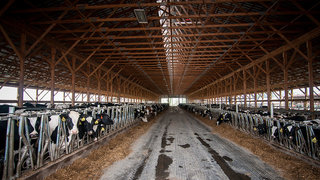
Feeding time in the free stallFinn, I know that you are vegetarian and concerned with preserving the environment. Why does that matter to you?
I am a sensible human being. Plus - and this is probably the differentiation - I do not close my eyes to what is going on in the world. I became vegetarian after thinking about where the meat that I was consuming (daily!) really came from. I ignored what marketing told me, and tried to be smarter than blindly believing what I saw in the supermarket. If you are really aware of how much suffering you inflict for you convenience, how would that not change your behaviour? It changed mine.

Years later, investigating more on the topic, I found out that it’s not only about meat. The entire animal farming industry is the root cause for a huge part of our CO2 emissions. Nothing in my private life has a bigger impact on the world's climate than having a vegan diet. I have no idea how people can get up in the morning being aware that with most of what they do over the day destroys the chemical composition of the atmosphere of our planet. So I guess they are not aware. And this is the main difference. It matters to all people, not just me.

What do you actually do regarding these things?
We are right now changing the chemical composition of our atmosphere and destroy our planet we live on. We are very close to a tipping point where the climate may change very fast. We have to stop this madness right now. And there is something everyone can do easily.

The CO2-Footprint of the beef of one burger is about equal to driving 100km by car. I neither eat meat nor drive a car. I organise film screenings about climate justice topics and I am in exchange with people from Ecuador, the US, Australia, China, India and more countries to think how we cannot only impact our private lives, but also our work environment.

What do you consider the biggest challenge (for humanity) of our times?
Again climate change. The poorest areas of the world already suffer the most. Syria experiences the driest times in history. Central Africa, too. They are already hotspots of wars and uprisings today. And we really wonder why so many refugees come from exactly those areas? There are fights between citizens and police in Mexico, because the people have no more access to fresh water. The arctic is melting at an incredible speed. While I love sailing, I would not enjoy sailing over the north pole in a couple of years.

What could we do to engage in these topics? For example, did you take part in public protests, donate money to NGOs or sign petitions?
I think the best thing one can always do is to lead by example. It is difficult to just sent some money somewhere. There are programs where you can donate money based on the miles you flew by plane to counterbalance your CO2 footprint. But studies showed that the people fly more when they use such services. They do not have a bad conscious any more, they pay to be free, and fly more.

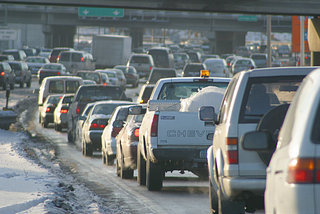
Traffic JamI would like to see more impact on these important topics of my regular work by just working on "the right things". Do you think that is possible in general?
No. If everyone does this our economy and lifestyle breaks down. This is not sustainable. Many people need to work so that we have the money that some can do "the right things". This is the basic idea of any social system. So the setting is there, but the balance is wrong: e.g. broker (who do not create value in the economy) earn up to 100 times more than people in child care. IT people earn 10 times more than activists working for NGOs. We have to balance that better than we did before. But it’s unreasonable to think that we will all just work for social justice issues.

There are many decisions we take before and during a project. Which choices do you think are relevant? (The recent VW scandal is an example. Developers could have chosen not to commit fraud.)
I think that this sounds easier than it really is. Imagine that you are together with 200 developers at VW. And all 200 seem OK with tweaking the software a bit. The reasoning - everyone else does it, too - seems just OK and so you go along. What is the alternative? Stand up against 200 colleagues? It is rare to find so very, very courageous people. If this discussion is going on it’s too late already. There is little you can influence as an individual in a large group. The least you can do is to refuse to do it. Someone else will do it, but at least it was not you.

I believe that we all as individuals should work on a culture where such a discussion does not even start. If 200 people would not even consider an idea to manipulate their software, then no one dare to ask. If we build software "properly", we build it secure and with high quality. Both characteristics oppose fraud. I think here a positive attitude towards the (real) product you are building goes hand-in-hand with a guidance to what is right. One should never blindly code, like a code monkey.

How do you think about selecting industry, customer and project based on your values and social responsibility?
This is really difficult! There is something "bad" to find about almost any company. Twitter and Facebook create the little interests-spheres. Amazon tries to make us buy more than we want (and more than some people can actually afford). Uber replaces long-lived taxi companies. Amnesty International does only oppose small third world countries. But what do they do about big companies that are even worse than some small nations? Did Amnesty ever raise issues about Google and their mass-surveillance? No.

Do you have problems with any industries? Why? What about Porn industry or weapon manufacturing?
So while I think there is not "the" company to work for there are definitely some not to work for: companies earning money in tobacco, oil, porn or weapon industry are not worth looking at. They do actually nothing to improve our world.

I think I can work in the finance sector or insurance. Usually, those clients pay well. And this money can then be used for a better course, like helping programs that are working on the social justice mission.

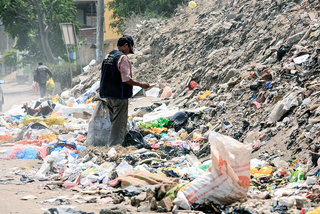
There is a Waste ProblemDid you ever reject a customer or an actual project, that would bring you money based on your values?
No. But I never had a client or project that was totally aligned with my values either. As I explained above: while there is no perfectly aligned company, I never join or reply to offers, that do not fit with my values.

On the other hand, what would be industries, customers and projects that you would love to work on?
I am lucky to work for a company that shares some of my values, especially about social and economic justice. ThoughtWorks just released an open source hospital system that was built together with doctors in India. It is now being rolled out in Pakistan and Bangladesh. There were some developers working on it, so my part was simply to ensure we have the money to do so, e.g. by joining "any" project in Germany.

If I could choose freely, I think I would either go into the automotive industry or renewable technologies. Why automotive? We are at the brink of electro mobility. But our old, rusty German companies move really slow in this direction. I would love to help them get up to speed and get rid of their 130 years old model of explosion-driven-vehicles. A society that is mostly vegetarian and bases on electro mobility is be something I would be proud to be a part of.

Thank you
Thank you, too!

21 November 2015

Interview Carlos Blé

After Sebastian my dear friend Carlos Blé agreed to talk to me about his values and meaningful work. Unfortunately we did not find a time to discuss the topic in person, but he took the time (I assume during nights) to answer my questions nevertheless. I reproduce his answers here - still all (spelling) mistakes are mine to blame. Read Carlos' blog or find him on Twitter to get in touch with him.

Carlos BléPeter: Carlos, please take a few sentences to introduce yourself in a professional context.
Carlos: My father bought an Intel 8086 back in 1987, I was just six years old. He had several books with examples of source code in BASIC. That fascinating language got me hooked, I used to copy listings from the book to the computer to see the program run. That marvellous machine seemed to be the gate to the future, as it turned out to be... Years later I had an Amiga 500, then Amiga 1200 and was an active member of the Amiga community. Later I discovered Open Source and installed GNU/Linux on my machine back in 2000, it was Mandrake, then Debian...

When I was in my second year in college I sold my first program, it was a Delphi program to read data from files and render as graphs. With the local Debian community I volunteered as system administrator in several LAN parties, installing and monitoring servers. My first "official" job was as a PHP developer and Linux system administrator. My third job was my own company which made me grow as an individual. I started with three good friends and ended without company and without friends, but I learned a lot about myself and many other things.

Moving to Ireland was another milestone in my career, I went there without job and without a place to stay, spending a couple of weeks in a cheap hostel. I was over optimistic and did not really know how hard it is to start from scratch in a different country with a different spoken language. As you can imagine that was an awakening. That year in Dublin my brain learned to think in English and I learned that I could make a living as a developer anywhere. That gave me confidence to start up new projects when I moved back to home. I thought that if everything went wrong I could move abroad for good while this crazy bubble was still growing in Europe and the US.

What do you consider your biggest successes?
In the long term, the success lies in the perseverance. Working in many different places and learning from different people has helped me a lot. Writing a blog and self-publishing the first book on TDD in Spanish opened new doors. Sharing what you know and learning from others is essential. I have been using computers my whole life pretty much and I have been making a living out of it for about 15 years now. Today I run a successful company providing training and consulting as well as development services.

I know that you are vegetarian since more than ten years and I noticed you sharing content about cruelty to animals in factory farming. Why does that matter to you?
Once you know what happens in the factory farms and the slaughterhouses it is not very difficult to become vegan. Discovering the lies of the system is like taking the red pill in Matrix. I am slowly transitioning to a way of life that is sustainable for the planet. I do not want to take part in the animal holocaust. Most people do not know the truth about the system, the way the planet is dying so I feel like sharing what I know.

The reason to become vegan goes way beyond respect and empathy for animals. The carnist system (meat industry, consumers, etc.) is killing the planet at a dramatic rhythm:
  • 51% of the greenhouse gas comes from the meat industry.
  • 45% of the Earth's solid surface is used by the meat industry.
  • 10.000 square metres of land may produce 27.600 kilograms of vegetables, however it only produces 280 kilograms of meat.
  • Between 4.000 and 8.000 square metres of Amazon rain forest disappear every second, they are destroyed to grow grain for animals in the factory farms.
  • Three quarter of animal life in the ocean has disappeared already, species like tuna are disappearing quickly.
  • A single hamburger requires 3000 litres of water.
  • 70.000 million of animals die every year for meat.
  • Most of the food for animals is transgenic, which is killing the diversity of the vegetable species on the planet and giving even more power to large corporations like Monsanto.
And there is the protein myth, people believe that we need more protein that we actually need which is causing many diseases. The myth is promoted by the carnist system. The time of our life when we experiment the highest growth is within our first two years of life, when we only drink breast milk, consisting of only 6% of protein. There are top level vegan athletes like Carl Lewis. Look at the muscles and power of vegan Frank Medrano. It is interesting that after all these years as vegan myself, people keep telling me it cannot be healthy, despite my excellent health. I am a living empirical evidence!

Carlos planting cropFor references and more information about the numbers above I highly recommend the book Why we love dogs, eat pigs and wear cows by Melany Joy, it is an eye opener, a terrific book. Our ignorance is causing our own extinction but I believe we still can change it, I am very positive about it. I see more and more people aware of their consumer habits. Consumers have the power to change the world. I recommend the documentaries Cowspiracy and Home for those how want more numbers and facts.

What other topics are you concerned about and what do you actually do regarding these things?
I try to reduce my ecological footprint as much as I can, everyday a little step further towards a sustainable life which involves many areas, a lot of thing to learn and unlearn. We have been educated for competition but the current situation requires collaboration. So I want to be the change that I want to see in the world as Gandhi said, I am the first one who has to change in many respects. Every little gesture helps.

The easy way for us to change the world is by changing our consumer habits. Buy local food rather than going to a massive shopping centre. By organic food. Reduce the amount of animal products in your diet (you do not have to be vegan) and buy them directly from sources where you can see with your own eyes how the animals are treated. Help local producers first. Ask big corporations to be transparent when it comes to the way they produce their products. We need to know how things are made to make good decisions.

Make sure that cosmetics and cleaning products have not been tested on animals. There is no need for that at all. Laundry and dish-washing detergent as well as other cleaning products have a big impact in the nature, causing water pollution. Search for sustainable alternatives. Recently I have found a woman who makes soap in the traditional way and I am buying her soap and using it for the washing machine and dish-washing.

Do not buy stuff you do not really need, consider buying second hand. You do not need a new laptop every year or a new cell phone every six months. Do you have an idea on the ecological footprint caused by mobile devices? It is a good time to start wondering about these type of things. The way you spend your money has a direct impact on the life of the planet. Governments and large corporations are not taking care of the planet for us, we are the ones with the power to change. Your choices when you buy are way more important than your choices when you vote for a politician party. See the interesting documentary the story of the stuff for more details.

Outside your personal topics discussed above, what do you consider the biggest challenges of our times?
To survive our own ignorance, to stop living as if the resources of the planet were infinite.

What could we do to engage in these topics?
Whatever you do, it has to be fun or rewarding in some respect, otherwise it will not be sustainable and you will finally stop it. The transition movement is very inspiring, it is like a great promise and it is working in many places, e.g. agroecology, permaculture, de-growth, and so on. There are nice and cool things to get involved in, more than we think. I recommend the documentary In Transition.

Carlos' first cropThe less money you need the more freedom you get. I am starting to grow my own food at home, my plan is not to need money for food soon. I plan to instal clean energy at home so I am able to survive without money while my lifestyle is humble. The way we spend our money, the way we shop is more important and more powerful than we think. I am also limiting the number of flights per year, this explains why I am attending less conferences than usual.

Most of our time is spent on regular work and thus I want to see more impact of my work. While I could quit my job and do charity only, I would rather keep doing what I can do best and earn my salary as usual, just working on "the right things". Do you think that is possible in general?
Everyday at work we have an opportunity to be nice to others, help and support them with love. We do not have to quit our jobs or run charity organisations. We just have to be aware and consistent with our thoughts, our feelings and our words. Take a look at Radical Simplicity.

Do you have any examples where you took professional decisions based on your values and social responsibility?
I have been lucky not to work on projects or at companies that I consider deeply against my principles. I try to listen to my gut feeling. Sometimes I take a day off to disconnect and get some inspiration from nature.

How do you think about selecting customers and projects based on your values?
I try to know more about my customers before working with them. I do some research and if I do not like what I find or what I see during my first visit then I just do not work with them. As I said I have been lucky enough to stand in a position where I can say no to some jobs. I understand that not everybody can say this all the time.

Sometimes a company does not sound very good but it is still worth visiting it to see what they do and how they do it. There is always time to reject projects or customers. I try to avoid companies where everybody's goal is to make money. Money is a means and not a goal in itself.

Let's be more specific. Would you work for an animal factory? Would you work for a company producing equipment for animal factories?
I might visit some of those companies to meet people before saying no beforehand. The list of undesired industries or projects would be big man ;-) But yeah, I do not work for money, money is a secondary effect.

Did you ever reject a customer or an actual project based on your values?
When you leave a company, most of the times the reason is that you feel you have different values and principles, a different vision. Otherwise you stay. I do not want to write any company names in here.

BatCat from Carlos' cat shelterWhat would be customers and projects that you consider important and have an impact on society and the problems we discussed earlier?
As a software developer, your colleagues are the ones who make projects interesting and fun. People are the key. I recently saw that the guys from Avaaz were recruiting. They work for a better world and I signed many of their petitions, but I have enough years of experience not be enticed for their job offer because I do not know anyone working there, I do not know about their values as software developers.

Years ago I used to work as the "computer man for everything" in a little charity shop and I it was not nice at all because time and energy was spent discussing irrelevant stuff, fighting with egos, with no impact at all in the final goal. It is a romantic idea to think that a software project might have a positive impact on the world. Sometimes it does but in my experience the values and principles of the team are what really matter. I search for a combination of projects with less negative impact on the world, whose team members are people I know and who are aligned with my values and principles as a professional.

For example, one of my current customers is a car importer and dealer. The cars they sell need oil to run, they are just regular cars. It does not sound like a company that helps the planet. But I do have a gasoline car as well and so far I could not find a way to live without it. I try to minimise gasoline waste and hopefully someday I will not need the car or I will at least have a solar car. But it would be silly to say "I don’t want to work for a car company" while using a car myself. Moreover, the employees have a great sense of collaboration. People help one another in the office, the company really cares about the employees and people are happy working in that environment. I had the chance to meet the CEO several times for lunch and he has told me that they donate almost half a million Euro every year to local NGO's. I have shared my concern for the climate change and the peak oil with him. These guys have a lot of potential to change things for better so I see the job as an opportunity to help influential people awake awareness apart from growing myself as a professional.

I have been brief but if people read the answers and write comments or further questions I will go deeper into the subject, I just need some feedback to do so ;-)

Credits
Thank you Carlos for taking the time to answer my questions. This has become a long article but I believe it is worth it. I really enjoyed discussing these important topics with you and appreciate that you took the time to share. Thank you very much and I wish you all the best for your projects in the future.
16 November 2015

Interview Sebastian Göttschkes

Following up on my previous post on meaningful work I want to further dive into the topic started there. As most of our time is spent on regular work, i.e. in our day job, I am especially curious about the impact we could have there. For me as software developer my day job is to sit in a chair and press keys on my keyboard in weird sequences almost all day. And by doing that, what can I do about the important issues of preserving the environment or cruelty to animals to name just two examples? Is it possible for my work to help these issues? Is it possible to make a difference by just working on the "right" things? What are these "right" things?

To get some answers, I decided to use a more structured approach. This topic is complicated, probably highly philosophical, and I do not expect to get good answers by analysis alone. I think we need to start a dialogue with one another to discuss and define what our responsibilities might be. I created a list of questions and started asking some of my peers, i.e. developers with solid experience of working in our industry. I have collected their answers and will mark their ideas and opinions either by quoting or typing in italics to separate from my own interpretations and errors.

Introducing Sebastian
Sebastian Göttschkes was the first to accept my invitation. Sebastian is a developer living in Vienna. He is interested in programming since he was a kid and started coding when he volunteered for programming classes in school. After finishing his studies at university he has been working as professional software developer for ten years. He likes to build stuff. Read his blog or find him on Twitter to get in touch with him.

Vegetarian food or notBeing Vegan
I noticed that Sebastian was vegan and asked him about it. Some time ago he had started to eat less meat due to health problems. Being concerned about what to eat and what to avoid, he thought more about food in general which led him becoming vegan for ethical reasons. He said that being vegan is important to him because as developed being he does not want to treat other beings badly. Cruelty and killing is not necessary for his survival. It is disappointing how we, human beings treat other beings. We should be able to do better.

Other Topics of Concern
Sebastian is also very concerned how we treat one another as individuals and as society on the whole. The current refugee crisis in Europe is a perfect example. If people are starving we have to help them. We have to help first, there will be enough time for discussion later. Currently there are many discussions in the European Union regarding refugee quotas and refugees are forced to wait. Surely they need to be registered and their claims have to be verified, but that could come later. These people should not be treated like numbers on some form. Sebastian believes this to be the result of our capitalist ways. There are more and more areas where people and whole systems are reduced to numbers.

Challenges for Humanity
When I asked Sebastian about what he considered to be the biggest challenges for humanity he laughed. There are plenty. The environment is obviously very important. We need to fight climate change and forest deaths. We must not destroy our planet. Further politicians and governments need to work together smoothly to avoid wars and all the unrest caused on a global scale.

How to engage in these topics?
Sebastian likes to talk about being vegan but he makes sure not to have a reproachful attitude. People are open for the discussion when they are not attacked or forced a bad conscience. Even a single meal without meat each week makes a difference. In the current refugee crisis in Vienna he keeps donating goods and actively supports the NGOs helping refugees around Westbahnhof where he lives. He has also organised charity concerts in the past.

My first questions were just introducing Sebastian and setting the stage. The really interesting question was about the impact of our regular work. I asked him several questions regarding impact, choice of work, choice of project, customer or industry and so on.

Is it possible to have impact on your day job?
There is the social entrepreneurship movement which has similar goals. Today almost every product or service needs supporting technology so we developers have many options. As our technology is everywhere we should be able to find jobs with more impact in general. But the problem is to find suitable companies and keep the standard of living at the same time. Also it is more difficult for people with a high degree of specialisation. Sebastian looks for companies who help people in some way. Even regular companies can do that, it is not necessary to work for NGOs exclusively. But it is difficult to recognise such companies. You have to check each project you work on individually. Sometimes you cannot tell up front at all.

Poppyseeds Mom And DadChoice of Industry
While software development is an industry on its own, most of us work to support another industry, e.g. finance, insurance or energy, although often we do not take this choice deliberately. Sebastian does not believe that the choice of industry matters. It is more important which company you work for and even more so which project you actually work on. While the finance sector has a bad reputation, supporting micro loans to help poor people is a good thing, unless the project's goal is to rip off everybody and just make more money. In general Sebastian recommends to stay away from finance and overly capitalist industries, because of their problems discussed earlier.

Choice Based on Values
On the other hand it is not easy to find a company according to one's values. We cannot be too particular because we need the money. As we are part of the system, i.e. our society, our current way of life, our capitalist world, we have to live by its rules. All I can do is to decide according my values inside my possibilities and choose from the options I have. But the system is complex and hard to understand. There is much indirection and it keeps getting more and more indirect. For example some things we consume are not made locally. And even if we know where something was made, we do not know where its raw materials came from. It is not unusual for raw materials to travel halfway around the world. It is impossible to think about all the problems and implications so they are usually ignored.

Choice of Companies
I was not satisfied by Sebastian's answers and continued asking because I wanted to explore his values and decision process more. For example I asked him if he would work for a butcher? He denied, but he would work for a company working for a butcher. In fact he has worked on some platform of local advertisements where butchers would be able to advertise their goods as well. I kept asking and asking, but Sebastian did not have a list of undesired customers. Sebastian prefers small companies. In general small companies are less "evil" than larger ones because they have less power and cannot ignore laws. Small companies have other goals and there are still people in charge who have a conscience.

Projects are especially interesting to Sebastian when they try to change people's way of thinking without blaming. For example he mentioned TREEDAY, a gamification of checking CO2 footprints, or WienRadeltZurArbeit where you win prices by collecting miles of going to work by bike. These initiatives are great because by making people think they have more impact than by just supporting people who already care for the topic.

Conclusion
I enjoyed talking to Sebastian and it took us around 90 minutes to cover all questions. The conclusion is that there is neither black nor white. What should we do if we write software that - in the end - destroys 100, 1000 or 10000 jobs? Maybe there is no way we can do the "right" thing - either we do not know all its implications or we have no choice. But to ignore the situation is definitely wrong. We need to address the issues, preferably in a positive, improving manner.

Credits
Thank you Sebastian for sharing your values and ideas with us. I am glad you took the time and I appreciate the interesting discussions we had. Thank you very much.